- Get link
- X
- Other Apps
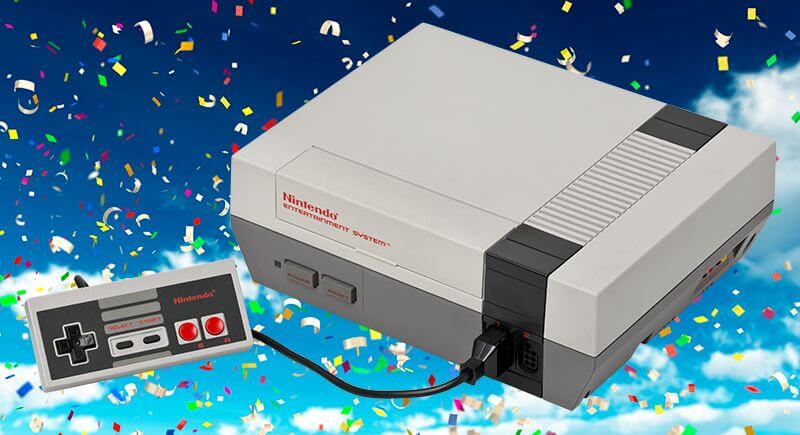
Japanese game console Nintendo Entertainment System (NES) without exaggeration is one of the most popular and famous entertainment devices in the world. True in Russia, almost no one heard about it, because in our country there were numerous Taiwan clones (including Dendy) of the ancestors of NES - consoles Nintendo Famicom. It was NES that popularized video games in the mid-1980s and introduced several very important innovations to the industry. October 18, 2015, the console celebrated its 30th anniversary.
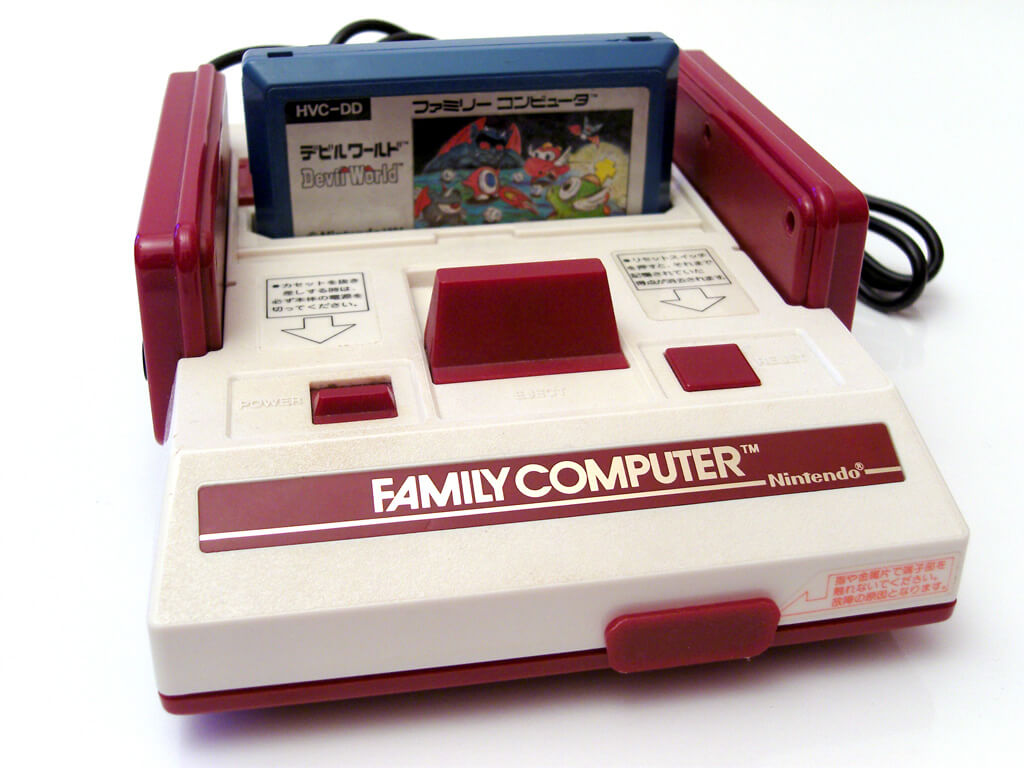
In Japan, the console appeared two years earlier (July 15, 1983) than in the western market and three years earlier (September 1, 1986) than in Europe. At home, it was called Family Computer, or simply Famicom, and externally was very different from NES. Developed the console Japanese engineer Masayuki Uemura, who before Nintendo worked for another company - Sharp. In Sharp, he was engaged in research in the field of photocells. It was he who created the special technology that Nintendo later sold, where she found her embodiment in the same light gun with which many of us ruthlessly shot ducks on the screens of their TVs. This deal allowed Uemura to get a job in Nintendo, where he created some of the best gaming consoles in the history of the industry.

Initially, the console was supposed to be a 16-bit system with a full keyboard and a floppy disk drive, but Nintendo president Hiroshi Yamauti insisted on making the console cheaper, thereby making it more accessible to users. As carriers of information it was decided to use cartridges. In October 1982, the first test model of the console, codenamed GameCom, was assembled, after which the development of software for it began. The wife of Masayuki Uemura came up with a more affable name - Family Computer, or simply Famicom for a bush of elegance. In the Japanese spoken at that time, personal computers were called "pasokon", so it was necessary that the name of the new gaming device differ from them.
The case of the Famicom console was made of white and red plastic. This design was chosen by President Nintendo for two reasons: firstly, he liked the red-white advertising banner of the Japanese company DX Antenna, and secondly, the red dye for plastic at that time was the cheapest of all available on the market. Game console controller was developed in the image and likeness of the controls for pocket gaming gadgets of the Game & Watch series. He was created by another brilliant engineer of the company - Gumpei Yokoy.
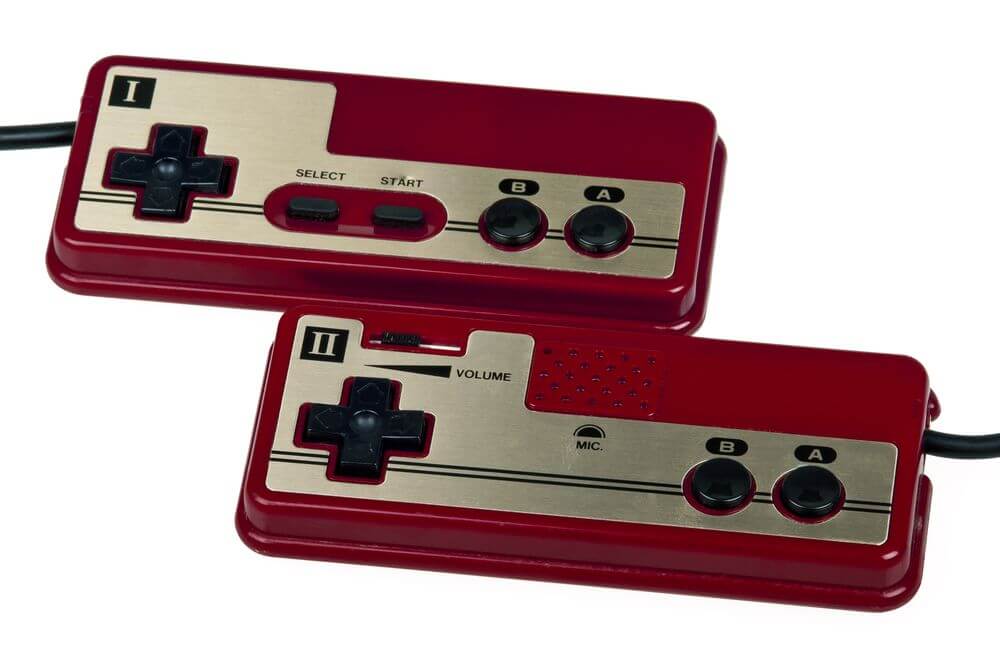
For the first time, the home game console got the usual D-Pad cross, which without it is difficult to imagine the further development of the gaming industry. The controller also had two round buttons, A and B, and two oblong buttons - Select and Start. On the second controller, the latter were missing, but there was a microphone and a gaming volume control. The microphone was later used in several games, for example, to kill by shouting certain monsters or blowing to rotate various objects on the screen.
On sale Famicom entered in 1983 at a price of 14,800 yen complete with three ports of arcade games Nintendo: Donkey Kong Country, Donkey Kong Jr. and Popeye. At first, the console sales were very weak. Yes, and the marriage of the first batch of chipsets led to the regular hang of the console, so that part of the goods had to be withdrawn from the stores. After the problem with the motherboard was eliminated, console sales skyrocketed. By the end of 1984, Famicom had become the best console in terms of sales in Japan. Now Nintendo had to withdraw its offspring to the American market.

To help the Japanese win the trust of American buyers was the company Atari very popular at that time in the West. But the negotiations dragged on very long, and even President Atari Ray Cassar was fired extremely inopportune. As a result of an unsuccessful combination of circumstances, Nintendo decided to release its own console on an unfamiliar market for itself. Masayuki Uemura had to make sure that the Japanese game console was to the American audience, and he puzzled over this question for a long time.
Initially, the Nintendo Entertainment System, namely as a prefix decided to call for the US market, was to run games with audio cassettes, be equipped with two gamepads and arcade joysticks. The case of the console resembled a keyboard like the popular Atari consoles. But after the relationship with Atari with Nintendo did not work out, we had to start developing the external appearance of the system from scratch. From audiocassettes refused in favor of all the same cartridges, which truth became almost twice as large, the joystick from the kit was also thrown out, as, indeed, the keyboard.

As a result, it was decided to apply a couple of marketing tricks. First, the console was decided to make it look like a VHS-VCR. These tape recorders in those years were extremely popular in the west, and the usual appearance of the gaming system could play into the hands of Nintendo. Specifically for this, a system for front loading of cartridges was developed, resembling the loading of VHS-cassettes. The second cunning of Uemura was a light gun, which the Japanese decided to add to the kit with each NES prefix. Americans like weapons, and it also had to draw their attention to the new device. Both strategic decisions eventually turned out to be correct.

In October 1985, the NES console went on sale at a price of $ 89.99 to $ 199.99 (depending on the bundle), along with 17 games such as Duck Hunt, Excitebike, Golf, Ice Climber, Kung Fu, Tennis, Wrecking Crew and, of course, Super Mario Bros. Despite the fact that gamers in the US have not yet recovered from the "Game Industry Crash of 1983", NES sales were so impressive that no one could predict such results. To date, over 60 million of these consoles have been sold worldwide, and this is without taking into account the hundreds of millions of clones that illegally copied the Japanese console.

Of course, many of you are familiar with only one of the Taiwanese clones, which in the early 90's sold in Russia, the company "Stypler." When it comes to the 8-bit Nintendo console, the word Dendy immediately comes to mind. Students from MSU cranked an incredible in its scope swindle and sold millions of consoles in our country without the knowledge of Nintendo. Moreover, later they even entered into an official contract with the Japanese to distribute the next 16-bit Nintendo Super Nintendo Entertainment System in Russia, only tactfully ignored their previous "dark deals". That's when all the truth surfaced. The management of Nintendo was deeply shocked to learn that the inhabitants of Russia played their games and games for several years without even knowing that the Japanese company had anything to do with them. But this unpleasant story has remained in the distant past, and now Nintendo officially sells its products to the Russians, moreover, it even began to localize its games for Russian-speaking players, which is especially pleasant.

Judging by rumors, in the laboratories of the Japanese company right now is creating a new gaming system, code-named Nintendo NX. It will be a hybrid of home and pocket prefixes. You can take the pocket part of the console with you on the road at any time and finish the game literally on the run. Well, we wish Nintendo success in all their endeavors, because it is thanks to the talented engineers of this company that the gaming industry has become what it is now. And the prefix NES again congratulate on the 30th anniversary. We have a wonderful opportunity to remember your favorite 8-bit games and indulge in nostalgia.
The article is based on materials .
Comments
Post a Comment