- Get link
- X
- Other Apps
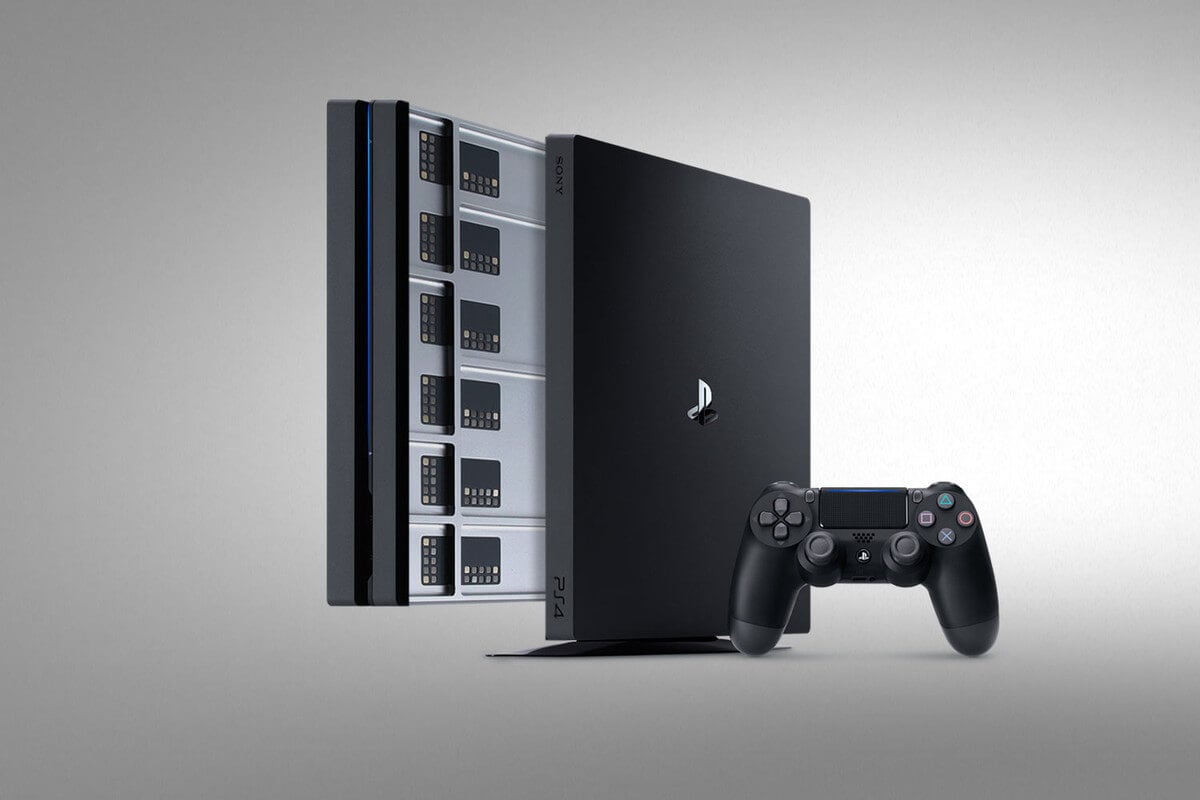
The market for home gaming consoles is changing rapidly. What used to be a successful investment in the center of their digital entertainment for 5-7 years, now gradually takes the form of just another meaningless investment in anticipation of more modern iron. Sony and Microsoft are going to release updated versions of their game consoles. PlayStation 4 Pro is promised for November, the Project Scorpio from Microsoft should go on sale next year. These events will definitely upset the owners of the original PlayStation 4 and Xbox One, as their investments will soon become "irrelevant."
In turn, for PC players, such events have never been a problem - if necessary, hardware can be upgraded without problems to more productive ones. But there are drawbacks here. Despite the fact that the susceptibility to modernization is one of the main advantages of the PC, for the average owner it often leads to a headache.
The same company Razer is trying to change the PC market with its Core system. The device allows you to use desktop graphics along with a portable laptop, simply connecting a powerful piece of iron on the wires. All you need to do is select the graphic accelerator option by your pocket and desire, place it in Core and connect the device to the laptop via Thunderbolt 3. After you finish playing, the user simply disconnects the cable from the laptop and again gets a portable machine for office tasks . Interestingly, this same approach can become quite relevant for future generations of gaming consoles.
To understand how this upgrade technology works, the Digital Trends portal contacted Travis Furst, the production manager for Razer.
"Razer Core is a product of mass collaboration with the world's largest technology companies," says First.
"We are working with Intel and their Thunderbolt development team. Most of the merit of the fact that this product appeared on the market belongs to this cooperation. Microsoft helped us with software and OS support, providing a seamless transition from an integrated to a discrete graphics. The support and support of AMD and NVIDIA was also very important for us. "
"There is no obligation here," continues First.
This means that any hardware manufacturer can add Core support as an option. This also means that the modular graphics technology is fully open for both Sony and Microsoft. Although Sony did not announce plans to use modular graphics, it's easy to see why this technology can one day be adapted by a Japanese company. Perhaps the most important factor is that this approach will significantly improve performance without the need to release a whole new console.
"I think the basic concept of modularity for PCs - the ability to quickly and easily upgrade and increase performance - can work with consoles," says First.
If you dig deeper
Of course, there are disadvantages in making the console modular. Michael Pachter, an analyst at Wedbush Securities commented:
"Modernization does not make sense, if the willingness to use it will express only a part of potential customers. This will create serious differences in the graphics standards for games, which in the end will lead to a market limitation and very upset developers. "
In the words of Pakhter really makes sense. Owners of the current consoles are already frustrated by the fact that new consoles will appear much earlier than it was with previous generations. After the emergence of new consoles will make the owners of the old feel somewhat uncomfortable against the background of those people who are already ready to update their entertainment centers.
"I think that games will be (and should) be developed taking into account the least productive hardware," Pakhter continues, adding that the consoles can not adapt the current PC model.
Interestingly, Microsoft and Sony agree. During the Microsoft press conference at the E3 gaming show, the company made it clear that all games for the Xbox One should be compatible with the older hardware. This, in turn, creates an additional problem. As insiders say, game developers are very unhappy with the fact that now games will have to be developed taking into account two sets of hardware.
For example, Rami Ismail, the founder of Vlambeer, a studio dedicated to the development of indie games and released such titles as Ridiculous Fishing and Nuclear Throne, is somewhat saddened by the fragmentation of the current generation of game consoles.
"From such work, if the development is not supported by the platform owner, the profit will be minimal, if at all," Ismail said.
The presence of a huge number of the same sold original versions of the PlayStation 4 consoles is likely to force a lot of developers to focus their attention primarily on the production of games, the technical requirements of which correspond exactly to the capabilities of this version, and then to do additional work to reveal the capabilities of the PS4 Pro version.
"None of the new opportunities can be transferred through non-4K- and non-HDR-content, so the marketing benefit from this is minimal," continues Ismail.
"And as there is virtually no possibility to block some functionality of the PS4 Pro and make its new possibilities subject to paid access, it is not possible to get any profit from this".
Ismail, however, does not agree that everything is really as bad as it looks.
"Of course, I did not observe that the developers were happy with the fact of fragmentation of the current generation of consoles, but in most cases this fact will not greatly affect them. All because the availability of the PS4 Pro version is not a mandatory requirement for enjoying new games. "
Modularity, however you look, will create an extra headache for Microsoft and Sony, at least if it comes to developers. If the latter will not be required to conduct development and for updated versions of consoles, most will not. However, the existence of a mandatory requirement will definitely cause discontent.
The future behind modularity, whether you like it or not
Sony recently reported that it was inspired by the growth of PC-gaming for the release of a more powerful version of the PlayStation 4. In the opinion of the company, the older players become, the more stable income they receive and are eager to invest their money in the system that will be able to offer them the brightest gaming experience. Sony believes that now, in addition to Xbox, it is in direct competition with the PC market, and to win this fight, it needs to create a system that not only simplifies the possession of the game console, but also makes it as powerful as PC gaming systems.
The transition to modularity in this case looks quite a logical step forward. After all, the technology not only allows literally on the fly to increase the power and quality of graphics, but also opens up for the consoles the possibilities of modernization, which are now available exclusively for the PC environment. Against this background, some "misunderstandings" on the part of developers can go to the background. In the end, game consoles are created specifically for consumers, not for developers.
The article is based on materials .
Comments
Post a Comment