- Get link
- X
- Other Apps
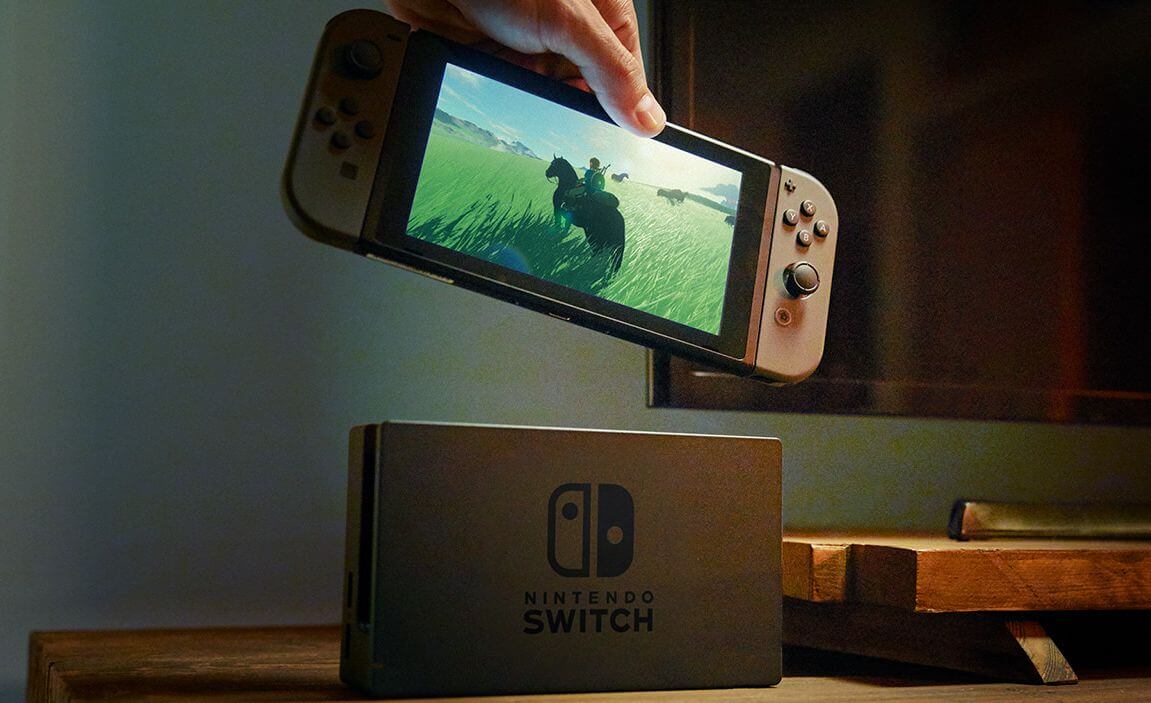
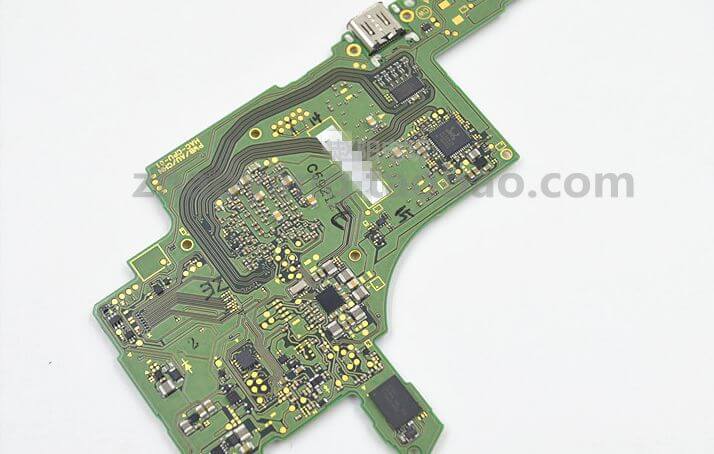
The release of the new Nintendo Switch game console is just around the corner, and we will definitely tell our readers everything about this device as soon as it appears in our hands after March 3. In the meantime, we suggest that you familiarize yourself with the technical specifications of the future console assembled on those scraps of information that we already have at our disposal. This became possible due to the recent leaks in the network of official technical documents, as well as photos of the dismantled console, which were published by employees of one of the Chinese companies engaged in the manufacture of spare parts.
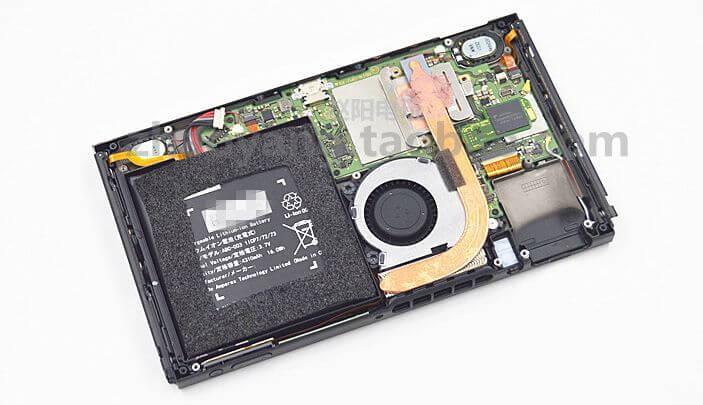
Let's start with the part of the console that today excites many potential buyers of Nintendo Switch most. And no, it's not a CPU, and not a GPU, but a battery. Yes, Nintendo openly stated that the console will work in portable mode for 3 to 6 hours depending on the load and the particular game. Well, our Western colleagues have already verified this statement and came to the conclusion that Nintendo does not deceive us. The prefix really worked for about 3 hours with the maximum brightness of the screen during the game in the new part of The Legend of Zelda. This is an excellent result, and the secret of success lies in a battery pack with a capacity of 4310 mAh . You can see in the photo that the battery occupies almost half of the space inside the case of the tablet part of the console. Specialists of the company Digital Foundry on this picture suggested that the replacement of such a battery at home will be quite simple, but Nintendo itself insists that it should be done only in specialized service centers.
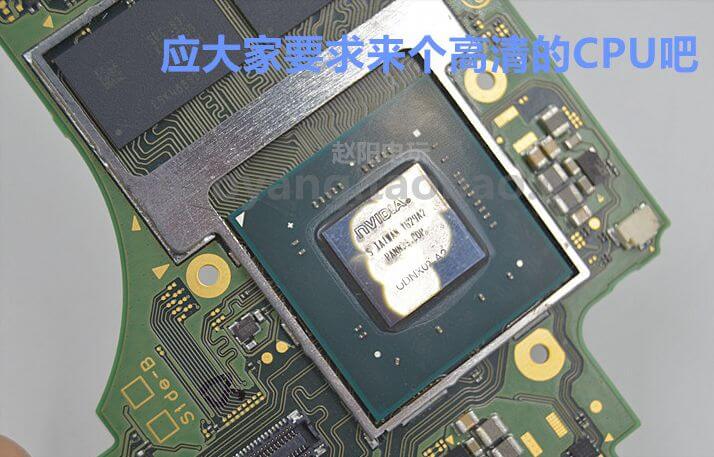
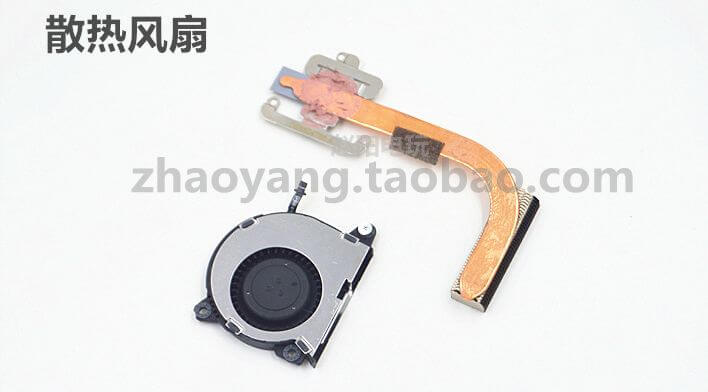
As for the CPU, the choice of Nintendo engineers this time fell on the NVIDIA solution. The heart of the Nintendo Switch was a modified (!!!) Tegra X1 processor with four cores ARM Cortex A57 , manufactured using a 20-nanometer process and consuming 16 watts at peak times. The 64-bit processor is equipped with an active cooling system, two megabytes of L2-cache and operates at a frequency of 1020 MHz . Experts note an unusual fact: in spite of the fact that the processor was manufactured using a 20-nanometer process technology, its dimensions are comparable to the new NVIDIA chips created on 16-nanometer technology. As the manufacturer managed to reduce the physical dimensions of the chip - it is not yet clear.
The graphics system built into SoC is based on the second generation of Maxwell architecture and contains 256 CUDA graphics cores. The GPU is capable of operating in three modes: with a frequency of 307.2 MHz , 384 MHz and 768 MHz . The maximum frequency of 768 MHz is available exclusively during console operation in the stationary mode when it is installed in the docking station. In portable mode, the Nintendo Switch graphics system is only capable of operating at two lower frequencies (the choice of frequency remains for the developer of the particular game). So it turns out that in the mobile version of the game only 720p is given, and when connected to a TV, they can output a picture of 1080r.
If you believe the documentation that leaked to the network earlier, then the console CPU is capable of overclocking to almost 2 GHz, and the GPU - up to 1 GHz. But, most likely, Nintendo engineers blocked the maximum frequencies to prevent excessive overheating of the iron. Here it is important to remember that this is the first hybrid console in history, capable of being both stationary and portable. And in the mobile mode it is extremely important to maintain a balance between power consumption and performance, so we had to make some compromises in terms of iron.
The console is equipped with 4 GB of RAM, which also works in two modes. In portable mode, it has a frequency of 1331.2 MHz , and in a stationary mode it can accelerate to 1600 MHz (but only if a particular game requires it). The memory bandwidth is 25.6 GB / s . Memory of the type LPDDR4 , if you believe Chinese photos, was produced in factories Samsung. There is no separate video memory at the console, and the GPU takes the necessary volume from the common pool. The console also includes 32 GB of eMMC NAND memory for data storage, about 6 GB of which is occupied by the proprietary operating system developed by Nintendo. Memory has a capacity of 400 MB / s .
You can expand the available memory of the console at any time by purchasing a microSD card with a capacity of up to 2 TB , however, to date, only 128 and 256 gigabyte cards can be found in stores (there is also a super-expensive 512 gigabyte, but for the time being I do not met), so that Nintendo, apparently, has made such a "course of the horse" with a backdrop to the future. In general, given the fact that modern games "weigh" pretty well, buying an additional memory card is a priority for any Nintendo Switch console owner.
Built-in screen with an IPS-matrix size of 6.2 inches has a resolution of 1280 x 720 pixels, as well as a touch layer with the same resolution. Unlike the screen of the Wii U game controller, now we are dealing not with a resistive, but with a capacitive sensor that supports up to ten simultaneous clicks. On the screen of the same TV, the console is able to display a picture in the resolution of 1080p with a frequency of 60 frames per second. The console also provides 24-bit 7.1-sound and is equipped with two built-in speakers.
Experts from Digital Foundry agree that we have the most powerful portable game console in front of us today. It has a balance that allows you to virtually instantly switch from a stationary mode to a mobile mode, so that the user can continue to play their favorite hits anywhere and anytime. It remains to wait for the official release of Nintendo Switch, which will be held on March 3, and make sure all this on personal experience. Stay with us, and we will tell you about everything in the smallest detail.
The article is based on materials .
Comments
Post a Comment